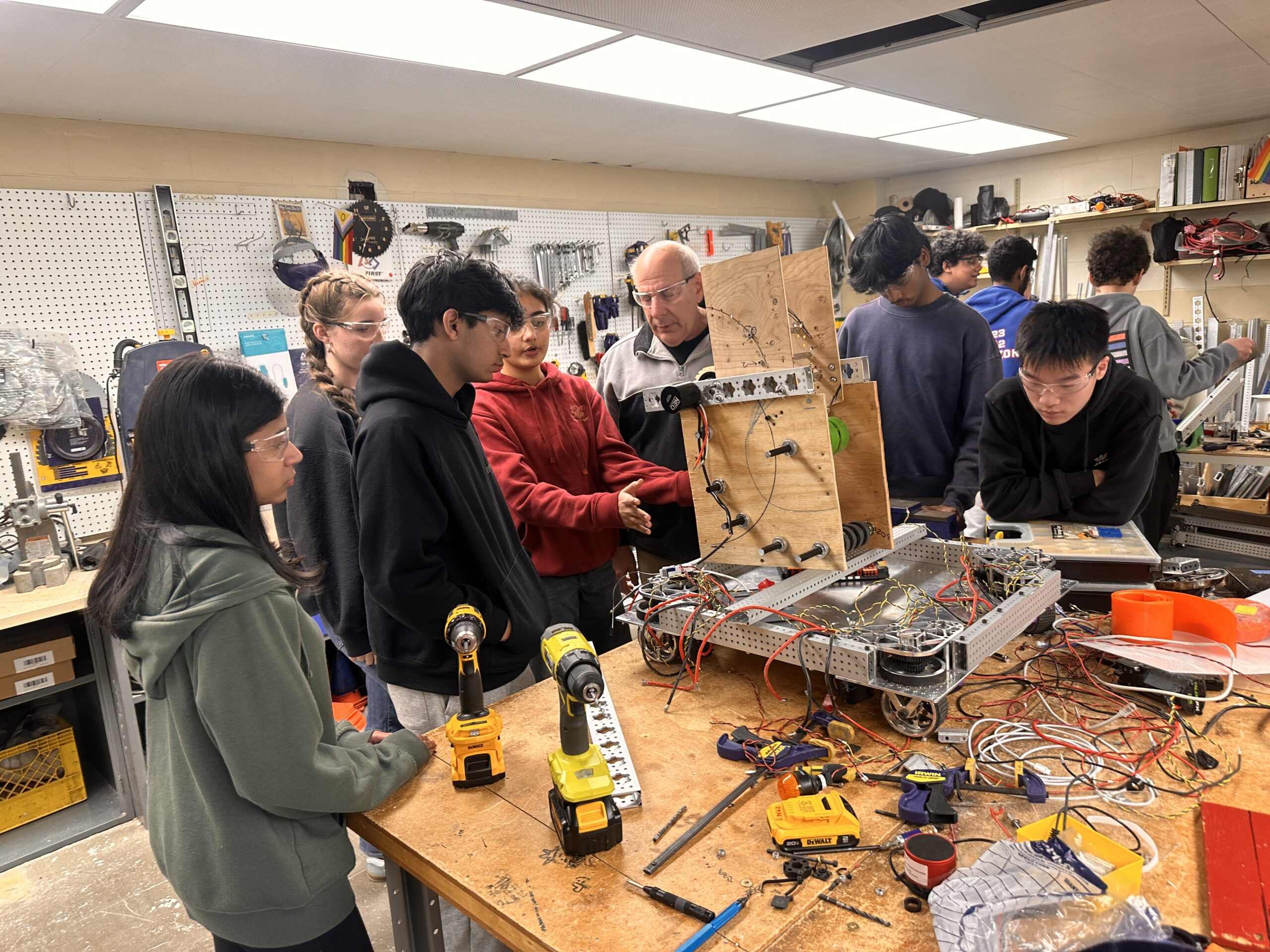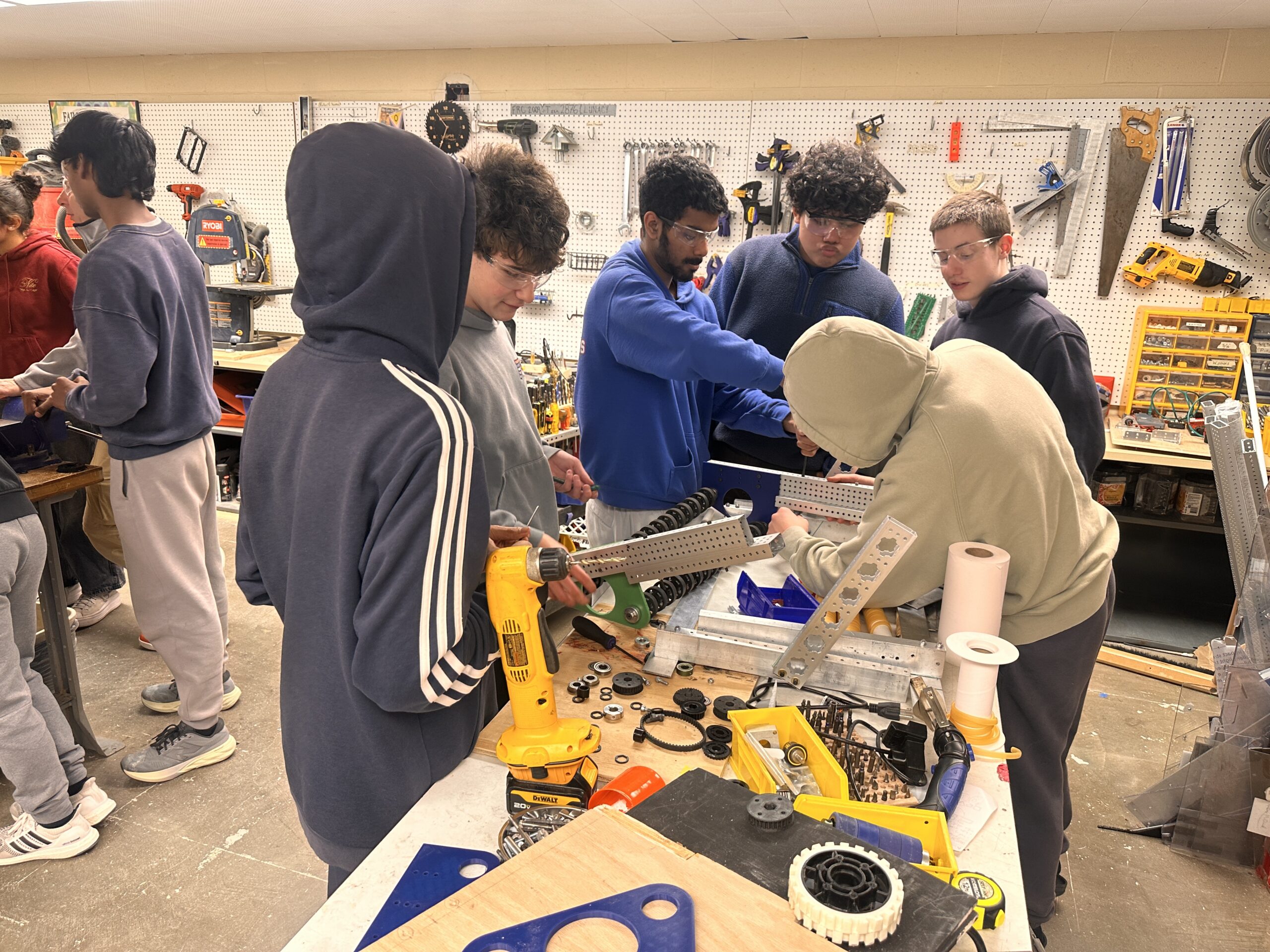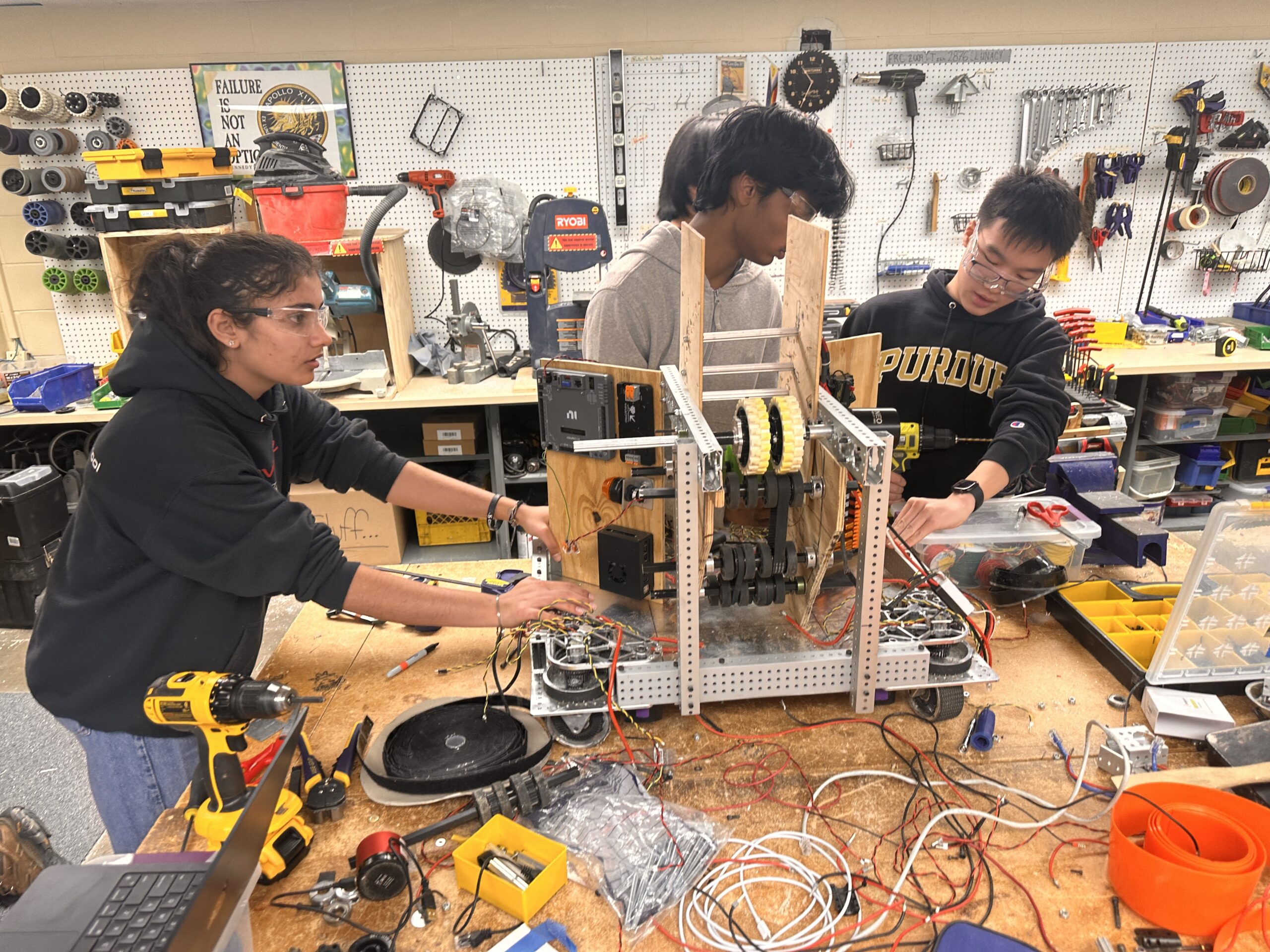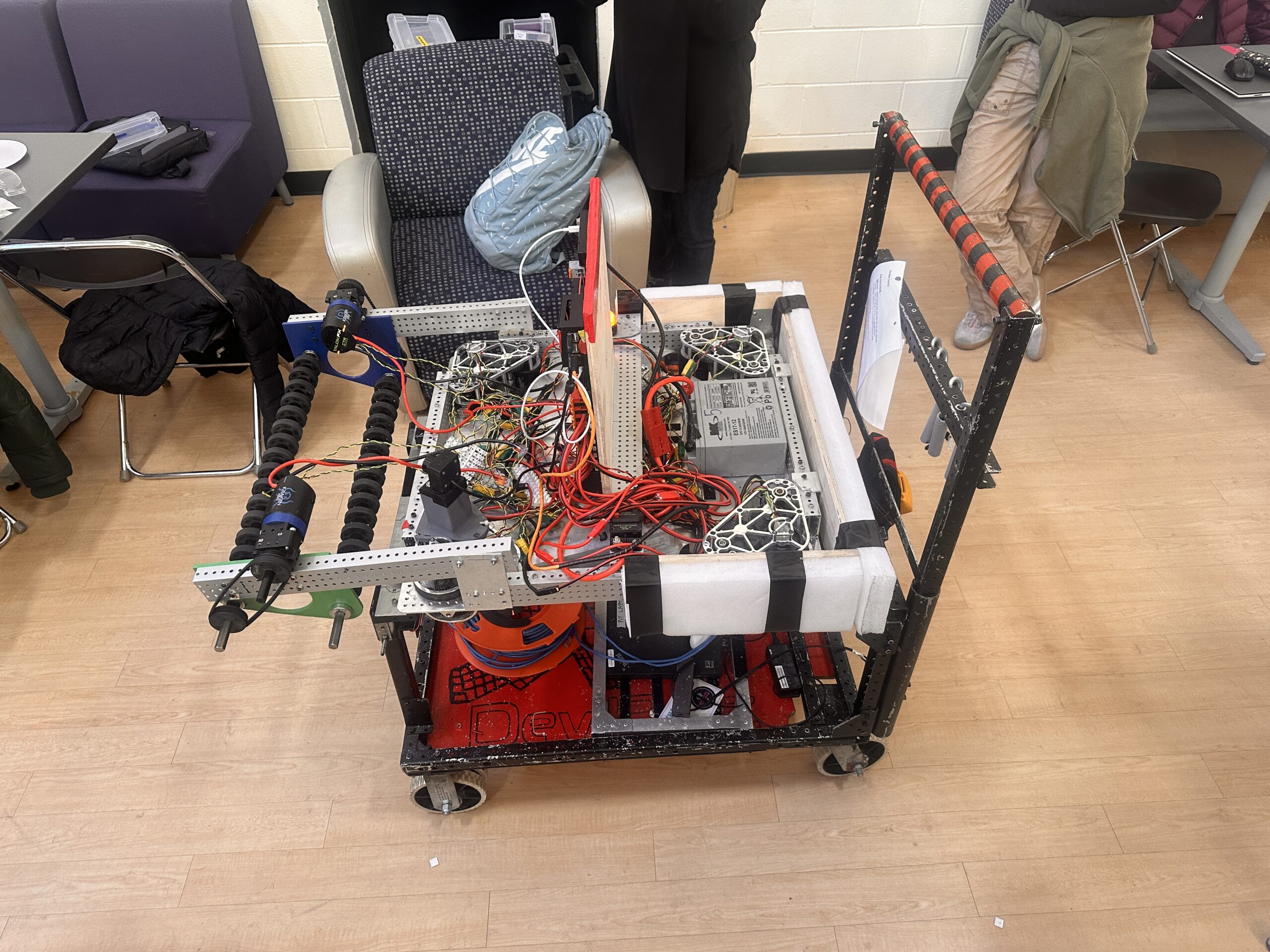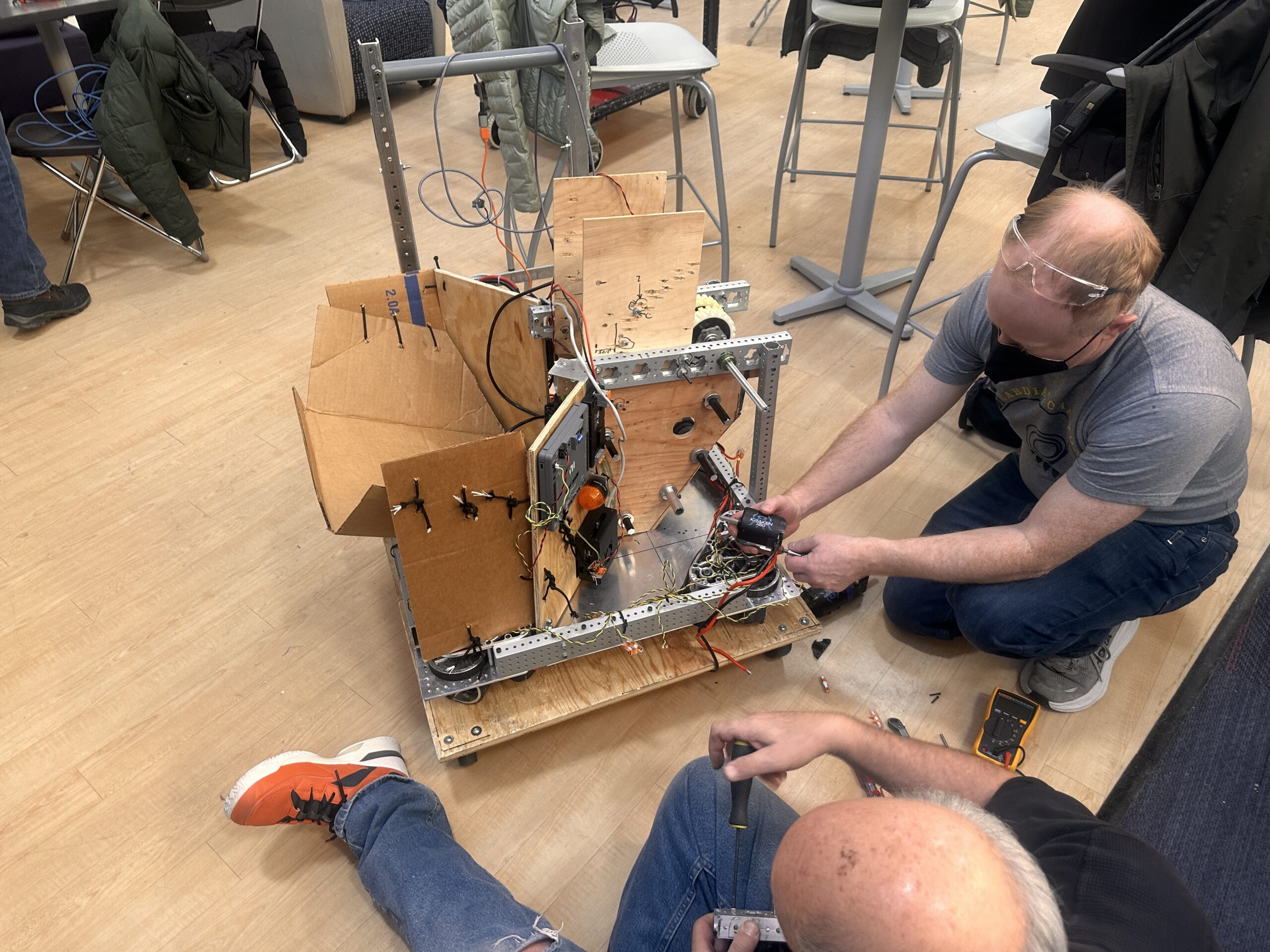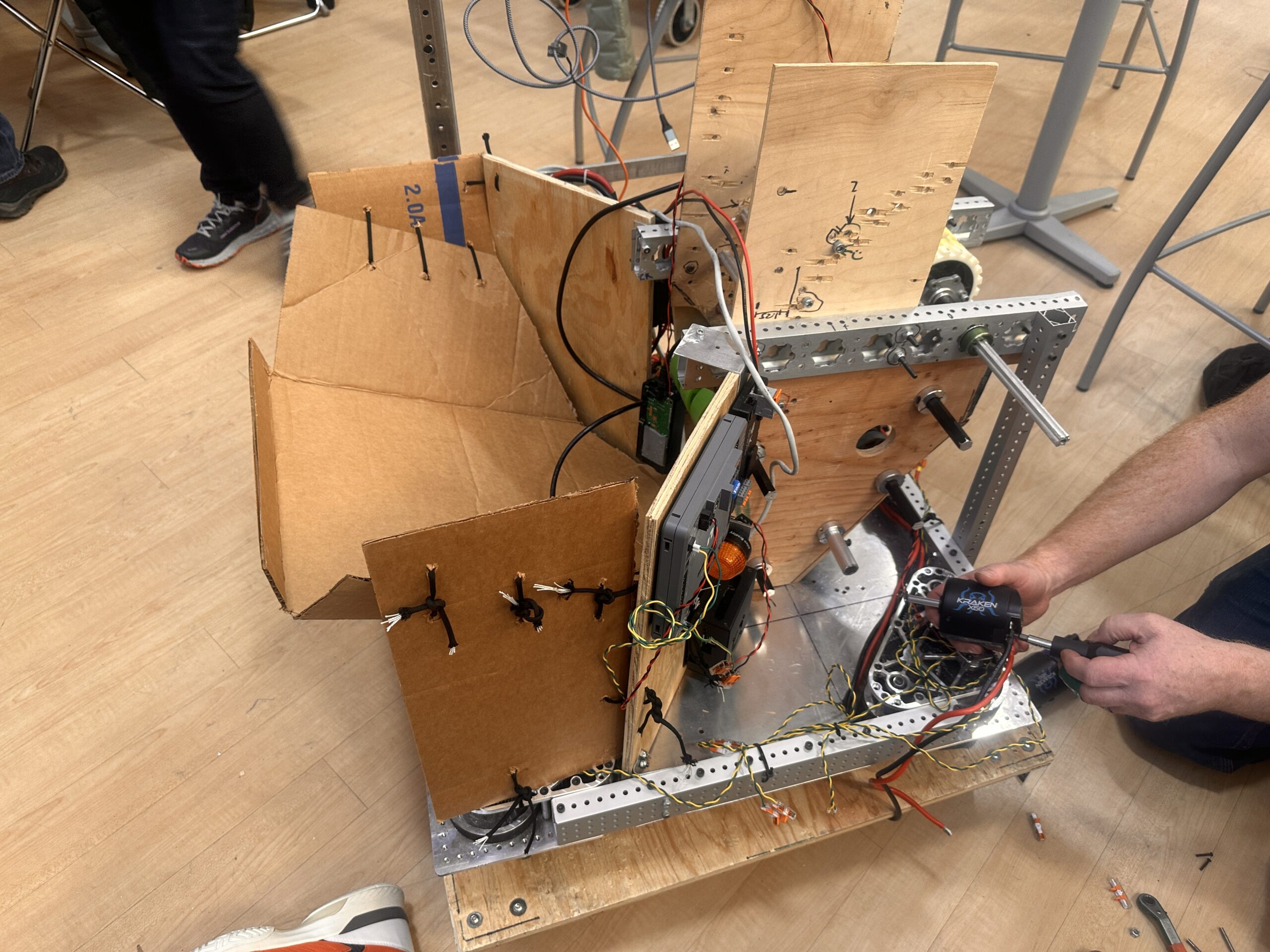

Week ‑5 was defined by parallel progress across software, mechanical, electrical, and CAD. With kickoff behind us and early prototypes validated, the team shifted into refining mechanisms, integrating subsystems, and preparing both RED and BLUE robots for testing. Much of the work this week focused on translating early ideas into manufacturable designs and ensuring our control systems and hardware are ready for iteration.
Software and Controls
Camera System Decisions
After reviewing three CAD‑based placement options, the software team selected Option 3, which positions the cameras nearly parallel to maximize field visibility rather than focusing on the robot itself. This decision gives drivers and autonomous routines a wider, more useful view of the field.
Intake Flywheel Controls
The intake flywheel was tested in simulation early in the week, followed by development of low‑level control logic. By January 31, the controls were tested on the real robot. Operators can now select the subsystem and adjust flywheel speed using the D‑pad, giving the team a reliable baseline for future tuning.
Kraken Firmware Updates
All Kraken motor controllers on both RED and BLUE robots were updated to the latest firmware. The final spare unit will be updated once it is mounted. This ensures consistent behavior across all drive and mechanism motors.
RED Bot Setup and Troubleshooting
The software team generated a CTRE swerve project and began testing on the RED robot. Early tests revealed:
- A back‑left wheel that did not move.
- A back‑right CANcoder that was not reporting correctly.
- A small piece of rubber falling out of the front‑left wheel region during testing.
Mechanical will inspect the magnet alignment and wheel hardware to resolve these issues. A new drivetrain properties file will also be created to match the robot’s configuration.
Radio Configuration
Both RED and BLUE radios were configured and tested for communication, ensuring stable networking for driver station and robot code.
Mechanical and Prototyping
Scrappy Hopper and Intake Prototyping
The hopper floor will be built from 1-inch polybelt, with final dimensions coming from CAD. The team also decided to add a joint over the swerve modules to improve packaging and movement.
Intake Motor Power Testing
Initial tests without gear reduction showed that 3.5 volts (about one‑third motor power) produced good results. A 3:1 gear ratio was added afterward, and further testing will resume once the intake is fully built and the chain/belt plan is finalized.
CAD Development
Scrappy Intake CAD
The intake CAD progressed significantly:
- Side panels were redesigned to support bearings and match prototype dimensions.
- The intake was attached to the hopper in CAD.
- A rotating shaft and pulley system were added.
- Additional mounting holes were requested to allow future hopper extensions.
- Next steps include designing the wheel‑shaft drive system and CNC‑cutting the side plates for mechanical.
Chassis CAD Updates
The drivetrain CAD was updated to reflect mechanical changes:
- Frame size standardized to 26 × 26 inches.
- Bumpers aligned to sit 2.5 inches off the ground.
- Bellypan raised to match mechanical requirements.
- Panels were created, dimensioned, and extruded, with a request to review spacing relative to the drive base.
Shooter and Indexer CAD
The shooter was fully CADed based on prototype measurements. The indexer was then dimensioned and integrated with the shooter assembly. Axles, wheels, bearings, and other components were added to complete the subsystem.
Integrated CAD
A combined CAD model now includes:
- Chassis
- Bumpers
- Hopper and intake
- Indexer
- Shooter
- Drivebase
Electronics are the final major subsystem to be added. Once integrated CAD is complete, mechanical will begin manufacturing and assembly. After handoff, the CAD team will shift to designing a dual shooter, improving the intake, and optimizing other mechanisms.
Electrical
BLUE Bot Chassis + Wiring
The BLUE robot frame was brought down to 26 × 26 inches, matching the RED robot. Wiring is being routed vertically with extra slack to support easier maintenance and subsystem swaps.
RED Bot Wiring
Power and CAN wiring were completed earlier in the season, and the RED robot is now fully assembled and wired with cameras mounted. Electrical is ready to support ongoing software testing.